Thursday, June 18, 2009

Apple updates Java for OS X systems


Apple has issued an update to the Java components for the two most recent versions of its Mac OS X operating system.

The update addresses a number of flaws in Java for systems running Mac OS X 10.4 Tiger and Mac OS X 10.5 Leopard, including security flaws which could allow for elevation of privileges and remote code execution.

One flaw could allow an attacker to remotely execute code by way of a malformed Java applet embedded in a web page, while another could allow an untrusted applet to elevate user privileges.

The company is recommending users of both versions of OS X to install the update immediately.

The news comes just days after researchers issued yet another warning to Mac users about a malicious Trojan aimed at OS X.

Security vendors have said that Mac OS X users are not generally accustomed to dealing with malware threats, and could be in increasing danger as more attacks emerge

Tuesday, June 9, 2009

WWDC 2009:شركة Apple تعلن عن “Find My iPhone” خدمة أيجاد الهاتف

WWDC 2009:شركة Apple تعلن عن “Find My iPhone” خدمة أيجاد الهاتف

Friday, June 5, 2009

Kingston targets SMEs with easy SSD upgrades


Memory maker Kingston Technology has launched a combination package aimed at helping individuals, and small and medium sized enterprises to upgrade from existing traditional hard drives to its SSDNow V value series of solid state drives (SSDs).

"We are trying to garner mass-market adoption of SSDs by bundling all of the software, hardware and step-by-step instructions in a couple of low-cost options aimed squarely at everyday users," said Steve Hall, EMEA branded product manager at Kingston.

"The V Series upgrade kits are a perfect complement to our existing line of SSDNow products that target enterprise customers and power users."

The new kits are available in 64GB and 128GB versions and, along with the drive itself, provide cloning software and instructions on how to transfer the data and swap out the drives, thereby removing the need to reinstall the operating system or lose any settings.

Once cloned, desktop users can have the operating system and applications reside on the SSD drive, while the old hard drive is used to store data such as music, videos, files and photos.learn more>>

Microsoft confirms Windows 7 release date


Microsoft has confirmed that the official release date for the new Windows 7 operating system will be 22 October.

In an announcement on the company's Windows blog Brandon LeBlanc, Windows communications manager, said that the launch date was now set and the company would begin selling the new operating system earlier than the previously announced date of 2010.

Final code development will be finished this month, he said, and manufacturers will start getting the code next month, at which point Windows Server 2008 R2 should also be ready.

"Release to manufacturing [RTM] is an important milestone," wrote LeBlanc. " We anticipate making the RTM code for Windows 7 available to our partners sometime in the second half of July. We also expect to be able to make RTM code for Windows Server 2008 R2 available to our partners in this time frame as well. "

The release will mean that Windows 7 will be in place for the crucial Christmas shopping period, when hardware sales are strongest. Microsoft is also instituting a scheme to ensure that sales do not die off in the meantime called Windows 7 Upgrade Option Program.

Sunday, May 24, 2009

Intel releases beta of Moblin 2.0 for netbooks


Intel has released a beta version of its Linux-based Moblin 2.0 operating system designed for netbooks and nettops.

The latest release is part of an ongoing partnership with Novell, and is optimised for use with Intel's Atom processors. Developers will be able to test the interface as well as dive into the source code.

"We would like to invite and encourage all developers to test the beta. We feel the code has reached a level where both developers and enthusiasts can play with it," said Imad Sousou, director of the Intel Open Source Technology Center, in a blog post.

Sousou stressed that this is a beta version, and that there are still some rough edges and performance issues to be ironed out, many of which will be addressed in upcoming weekly builds.

"We encourage anyone to test it and provide feedback to us through Bugzilla or on the developer mailing list. Only with your feedback can we further enhance the user experience," he said.

The interface has been built from the ground up using the Clutter Animation Framework. The toolbar and panels across the top of the screen have been designed to easily integrate internet access through a Mozilla browser, as well as to social networks, synchronised calendars, tasks, appointments and media content.Learn more>>

Google puts Chrome 2 out on final release


Google has released the final code for the second version of its Chrome browser, eight months after the official launch.

Chrome 2 comes with a claimed 30 per cent speed boost, thanks to the revised V8 JavaScript engine that processes downloads from multiple pages and allocates resources to most used items.

"Web applications are becoming more complex," wrote Google software engineers Mads Ager and Kasper Lund on the Chromium blog.

"An increased number of objects puts additional stress on the memory management system of the JavaScript engine, which has to scale to deal efficiently with object allocation and reclamation. If engines do not scale to handle large object heaps, performance will suffer when running large web applications."

More cosmetic changes include the ability to run the browser in full screen mode, an auto-fill function for remembering form information, and a new way to edit the opening screen which displays the browser's most visited sites.

"It's useful if you end up with a site in there that you'd rather not admit to visiting quite as often as you actually do," said Google Chrome product manager Brian Rakowski.

Google also claimed that the browser is now much more stable, as more than 300 bugs in the system had been fixed since launch.

Existing Chrome users will be updated "very soon", Rakowski said on the Google Chrome blog, and updates will be pushed out regularly in the future.

Friday, May 22, 2009

Visual Studio 2010 beta launches this week


Microsoft is set to release the first beta of its long-awaited Visual Studio 2010 tools suite next week.

The firm will first release the beta to its developer customers on Monday, followed by general release to the public on Wednesday, according to a blog posting by Microsoft developer tools solution specialist Jihad Dannawi.

"On 18 May Visual Studio 2010 Beta 1 (Professional, Suite and Team Foundation Server) will be available to MSDN subscribers through MSDN Subscriber Downloads and to the general public on 20 May through Microsoft Downloads," he wrote.

When it was announced to much fanfare last September, Microsoft explained that the new version of its flagship developer platform would try to democratise the application lifecycle by allowing all contributors on a software project to participate throughout the lifecycle.

Earlier this week, Jason Zander, general manager for Visual Studio's developer division, highlighted some of the changes that Microsoft has already made in readying the product for its first beta.learn more>>

Monday, May 18, 2009

HTC Magic


HTC finally released its successor to the G1 in the UK at the start of May, making it the second phone running Google's open-source Android mobile operating system.

The HTC Magic bears some similarities to the original G1, although it lacks the physical keyboard and the lines are a lot smoother. Like its predecessor, the Magic has a large 3.2in touch-screen, below which is a trackball and six keys to help drive the device.

The lack of keyboard makes the Magic a lot lighter and slimmer than the G1. It measures 113mm x 55mm x 14mm and weighs in at 119g, making it a lot more pocket friendly while packing a bit more of a punch under the hood.

Although it runs the same Qualcomm MSM7200A 528MHz processor and gives users access to the same 192MB of system memory, the capacity of the ROM has been increased from 256MB to 512MB and storage is expandable to 8GB through a microSD card slot located under the battery cover.

Like the rest of the interface, the virtual keyboard uses the built-in accelerometer to automatically adjust between portrait and landscape mode depending on how the phone is oriented. The keys in portrait mode are quite small, but are usually fine for short entries. In landscape mode the layout is excellent, but fast typists may struggle as the phone sometimes battles to keep up, occasionally missing letters if the typing is too quick. There is also an auto-complete and correct option to provide suggestions while entering text.

Running Android means that the Magic has very tight integration with Google's range of services. The potential downside to this is that you have to have a Google Mail account to use the phone, but if you are a prolific user of Google then over-the-air synchronisation with email, calendar, contacts and instant messaging is all completely automatic.learn more>>

Friday, May 8, 2009

AMD celebrates its 40th birthday


AMD is celebrating its 40th anniversary, and is asking customers to send in congratulatory photos and videos.

"In the past 40 years, AMD has transformed from a second-source supplier that worked within the confines of other companies' designs, to an innovator that has helped drive the market forward and kept competition alive and thriving in one of the most important technology sectors," the firm said in a statement.

"AMD takes great pride in our role of igniting next-generation technology solutions, as well as our ability to see where customer and end-user needs are headed next and then collaborate with the industry accordingly.

"AMD's 40th anniversary is a testimonial to our longevity, our employees, our customers and our unique business approach."

In order to 'give back' to its many customers, the firm has announced a large number of contests that will take place over the first half of its anniversary year.learn more>>

Thursday, April 30, 2009

T-Mobile unveils Cupcake update to G1 phone


T-Mobile has made available an update to its Android-based G1 phone, adding new features such as a touch-screen keyboard and the ability to film video and upload it straight to YouTube.

T-Mobile said that the so-called Cupcake update has now gone live, and that G1 owners will receive the code as an automatic download delivered to their phone sometime during May. The company announced at the same time that sales of the G1 handset are now approaching 100,000 units since it went on sale in November 2008.

The update to the G1's Android platform includes an on-screen touch keyboard, giving users a choice of input methods. The touch-screen keyboard might be used for short bursts of text such as Twitter updates, while the device's slide-out Qwerty keyboard is better for heavy duty use such as emails, the firm said.

Also included in the update is the ability to use the 3.2-megapixel camera to shoot video clips and upload them straight to YouTube. Photos can similarly be uploaded straight to a user's personal Picasa web album.

Other improvements include a speedier acquisition of GPS location with the phone, and user interface refinements to applications such as the email client, web browser, calendar and contacts. Users will also now be able to see the Google Talk status of their contacts in various messaging applications.

Windows 7 to get XP Mode for compatibility


Microsoft is planning a new virtualisation tool to provide better application compatibility for businesses migrating from Windows XP to the forthcoming Windows 7 operating system.

The feature will be called Windows XP Mode and will allow users to install and run applications in a Windows XP environment running under Windows Virtual PC.

It is specifically designed to help small businesses move to Windows 7, according to information recently posted to Microsoft's Windows blog.

In the blog entry, Microsoft said a beta of Windows XP Mode and Windows Virtual PC is coming in the near future, but will run only on Windows 7 Professional and Windows 7 Ultimate editions.

Microsoft had not responded to requests for further information at the time of writing, so it is not clear whether customers would require an additional licence to cover the XP environment or whether this would be included.learn more>>

Wednesday, April 29, 2009

Yahoo closing Geocities web hosting service


Yahoo will close Geocities, the free web hosting service it paid $4bn for 10 years ago.

“Sorry, new Geocities accounts are no longer available,” read a message on the homepage on Friday.

In 1999, when Yahoo purchased Geocities, it was the third most visited site on the web behind AOL and Yahoo, with 19 million unique visitors in December 1998, according to a Comscore Media Metrix report. Now Geocities is slightly outdated in the current Web 2.0 era, giving users no way to integrate their sites with third-party applications.

The closure is also evidence that the revenue model for hosting free web sites is difficult to sustain, especially in the current economic climate.

Yahoo has encouraged Geocities members to start upgrading to the company’s subscription-based Web Hosting service, although it assured them in a statement that they will still be able to access their sites and Geocities services until “later this year”.

Subscription to the Web Hosting service - which offers a personalised domain name, email, site building tools and premium customer support – costs around $114 (£78) a year for a 12-month contract.

The announcement follows a similar decision by Google to shut down Page Creator in June 2009 and migrate users to Google Sites.learn more>>

Apple tops one billion App Store sales


Apple's App Store has served its one billionth download, less than a year after it was formally launched.

The company said on Friday that it had reached the milestone when a 13-year old from Connecticut made a download.

The App Store was first developed to allow Apple to control the sale of third-party software for the iPhone and iPod touch, as well as give developers a single marketplace to distribute their software.

Apple said that the store is now available in 77 countries, and offers more than 35,000 applications. The store reached the download milestone much faster than the iTunes music store, which took nearly three years to serve up its billionth download.

"The revolutionary App Store has been a phenomenal hit with iPhone and iPod touch users around the world, and we'd like to thank our customers and developers for helping us achieve the astonishing milestone of one billion apps downloaded," said Phil Schiller, senior vice president of worldwide marketing at Apple, in a statement.

The user who downloaded the billionth piece of software, Connor Mulcahey, will be given a $10,000 gift card for the store along with a new MacBook Pro, a Time Capsule backup drive and an iPod touch.

Wednesday, April 15, 2009

EBay to spin off Skype next year

Auction site eBay has announced plans to spin off Skype, floating the VoIP service as a standalone business from early next year.

The announcement follows news that Skype founders Niklas Zennström and Janus Friis, who sold the system to eBay for $2.6bn (£1.74bn) in 2005, are trying to raise capital to buy it back.

"Skype is a great standalone business with strong fundamentals and accelerating momentum," said John Donahoe, president and chief executive of eBay.

Donahoe added that Skype has very little in common with eBay's core businesses, and would be better off on its own two feet.

"This will give Skype the focus and resources to continue its growth and effectively compete in online voice and video communications," he said. "In addition, separating Skype will allow eBay to focus entirely on our two core growth engines - e-commerce and online payments - and deliver long-term value to our stockholders."

Specific timing of the initial public offering (IPO) will be based on market conditions, but the move could make it easier for Zennström and Friis to regain a controlling interest in the company or buy it out altogether.

When Donahoe took the top spot at eBay in April 2008 he outlined plans to spend a year evaluating Skype's suitability within the rest of the company's portfolio, at the same time appointing a new management team led by Josh Silverman.

Thursday, April 2, 2009

Intel launches Nehalem Xeon processors


Intel has officially launched its first Nehalem-based Xeon chips for servers and workstations, bringing increased performance and greater power efficiency in the biggest overhaul of the Xeon platform for years.

The first wave of the new chips consists of the Xeon 5500 series for dual-socket systems, and the Xeon 3500 targeting single-socket systems, collectively known as Nehalem EP (Efficient Performance).

Nehalem processors for desktops were launched last year under the Core i7 brand, while the Nehalem EX for servers with four or more sockets is expected later this year.

Intel said that the increased performance of the new platform will enable firms to replace up to nine older servers with a single Nehalem-based system, making a strong case for purchasing new kit despite the current economic climate.

"We reckon customers can get a 9-to-1 consolidation ratio by replacing existing servers with Nehalem. There will be a capital expenditure hit to swallow, but after that there's a lot of justification for why customers should look at this now," said Intel's enterprise marketing manager Alan Priestley.

Touch-screens are not the future of computing, says HP


Despite the current emphasis on touch-screen functionality for everything from smartphones to table-top PCs, HP believes that touch computing will have only limited use for desktops and laptops.

Speaking at an HP workstations event this week in Los Angeles, Phil McKinney, chief technology officer of the Personal Systems Group at HP, said that touch is not the "magic answer to everything", and will not replace the keyboard and mouse.

"The fact I have to reach over to use the screen, you can do that for a certain amount of time but then you revert back to the mouse and keyboard," he said. "Touch as the only point [of contact] starts to have some challenges. Typing on glass is like banging your fingers on granite."

Regarding Microsoft's entry into the market with its Surface PC, McKinney was quick to point out that HP developed its own version of a table-top PC in 1999, although it was not until 2002 to 2004 that the firm went public with the details.

Misto featured a computer built into a coffee table or dining room table, but HP struggled to find much interest either in the commercial or consumer spaces. " You don't want a table that, three or four years away, the technology will be out of date and it's just a piece of glass," McKinney said.learn more>>

Saturday, March 21, 2009

What will iPhone 3.0 bring to the enterprise?


Apple revealed more details this week about its upcoming iPhone 3.0 firmware update which, although hotly anticipated, looks like bringing relatively minor enhancements for both consumers and enterprise users.

Among the most welcome additions will be the ability to cut and paste text, a feature which has been sorely lacking from the handset since its launch in June 2007. For business users who rely on the phone heavily for email, the feature will have immediate and obvious benefits.

Other enterprise-friendly additions include multimedia messaging and new recording features, which together could allow users to record and send audio through the iPhone's messaging tools.

While the updates are significant, the 3.0 firmware will hardly have the enterprise impact of last year's iPhone 2.0 release, which introduced 3G connectivity and support for a number of popular enterprise communications platforms, such as Microsoft Exchange and Cisco's VPN security, designed to usher the iPhone into the enterprise arena.

The real benefits for enterprise users, however, could come not from the end-user upgrades, but from the new tools Apple is providing to developers.

These include a slew of new application programming interfaces (APIs) which will greatly expand the individual applications that users will be able to access on the device.

The new APIs will allow developers to access 'push' data updates to display new events, for example, and to stream audio and video.learn more>>

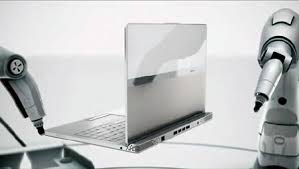
Dell ships ultra-thin Adamo laptop the rival of Macbook Air


Dell is now taking orders for its Adamo laptop, which it claims is the world's thinnest at about 16.4mm thick.

Adamo was unveiled at the Consumer Electronics Show in Las Vegas in January, and is the first product in an entire Adamo line that will feature new design aesthetics, according to Dell.

The laptop is available to pre-order today from the Adamo By Dell web site, and will start shipping worldwide from 26 March.

With a 13.4in widescreen display and measuring just 0.65in (16.4mm) thick, the Adamo has been compared to Apple's MacBook Air, claimed as the thinnest laptop when it launched in early 2008. However, the Adamo is significantly heavier at about 1.8kg.

Dell makes much of the Adamo's "premium craftsmanship and design", which includes a chassis milled from a single piece of aluminium featuring precision detailing, and a scalloped backlit keyboard.

The system is based on Intel Core 2 Duo processors, and is available in two configurations: the Base has a 1.2GHz SU9300 chip and 2GB memory for £1,649, while the Enhanced has a 1.4GHz SU9400 and 4GB memory and costs £2,249. Both have a 128GB Flash drive instead of a hard drive as standard.learn more>>

Saturday, February 14, 2009

Palm dumps PalmOS in favour of webOS


Palm has confirmed that it is dropping the PalmOS operating system to concentrate fully on the webOS currently being developed for the forthcoming Palm Pre.

Palm president Ed Colligan has told investors that PalmOS is being officially retired, and that the company's Centro platform will be the last to use the software.

"There will be no more PalmOS products," he said. "We will transition to webOS as our core operating system, in addition to supporting Microsoft Windows products in the enterprise segment of the market."

PalmOS was introduced in 1996 and proved an instant hit with consumers and business users. Palm eventually sold its software division to Access, and PalmOS became GarnetOS.

Friday, February 13, 2009

Netbook Wind U100 Valentine Edition as gift of Valentine's day


14 February, known as the day of love or called Valentine's day was near. usually, many people who give gifts on the day.and.MSI have been set up product that suitable to be marketed on the moment.
The product is a netbook that is named Wind U100 Valentine Edition.if pink color of the netbook is less representative, then try to see the accents with heart image of the casing.the fiture of this netbook is complete.there are LCD WSVGA 10, Atom Processor N270 1.6 GHzharddrive 160 GB, 1GB Memory DDR2/533MHz, Operating System Genuine Windows XP Home Edition, WiFi 802.11b/g/n, Bluetooth, 1.3 MP Webcam, Battery and 6sel.If you are interested in buying a netbook with a weight of 1.18 Kg, then you must prepare funds of about U.S. $ 430 to bring them home or making as a Valentine gift for the person who you consider special

Powered By Blogger

Followers